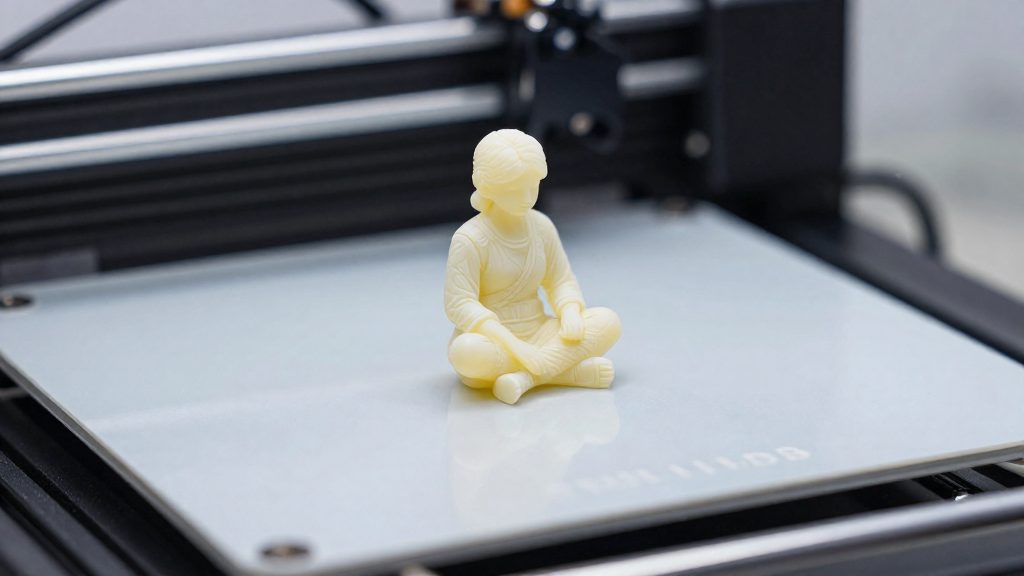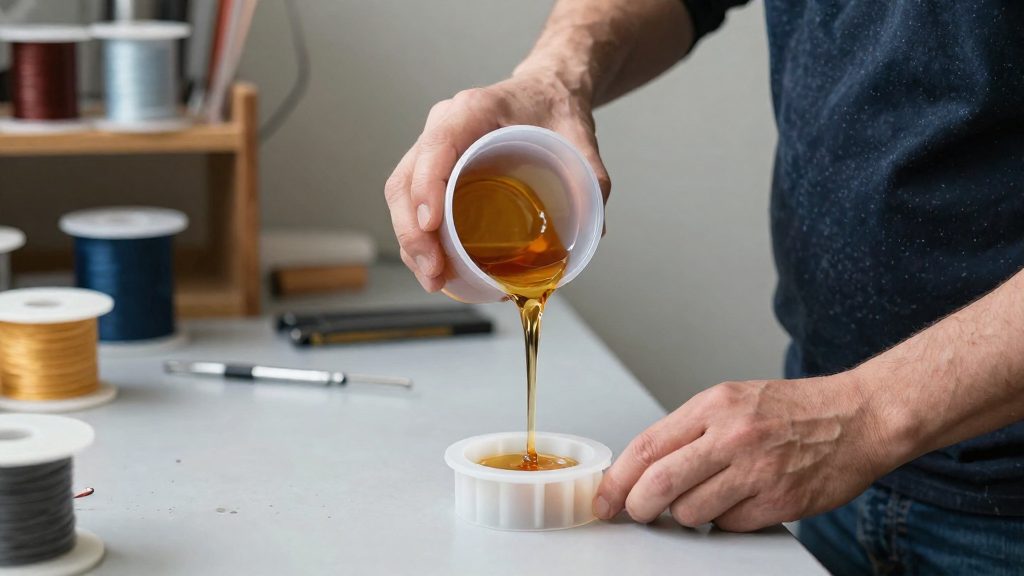
Castable resin is useful for making metal jewelry through investment casting: the printed pattern is embedded in investment, burned out, and replaced with metal (Formlabs, 2021). Formlabs offers two grades for this route, Castable Wax Resin and Castable Wax 40, which differ in wax content and in the pattern work they suit. The right grade depends on how fine the pattern is and which investment you plan to use.
Investment Casting Workflow and Resin Grade Selection
Investment casting workflow
The printer is only one part of the process. Formlabs’ jewelry casting workflow also requires a furnace, a vacuum investment machine and a casting system, and its guide specifies active ventilation for indoor burnout. The sequence runs as follows:
- Print the pattern on a resin printer.
- Wash the pattern.
- Embed the pattern in investment.
- Burn out the pattern in the furnace.
- Replace the burned-out pattern with metal using the casting system.
Choosing between Castable Wax Resin and Castable Wax 40
| Grade | Wax content | Documented properties |
|---|---|---|
| Castable Wax Resin | 20% | Washing required, no post-curing before casting; recommended for detailed patterns, including thin walls and fine surface details |
| Castable Wax 40 | 40% | Low expansion; compatible with leading gypsum investments; 0.0–0.1% ash content |
Castable Wax Resin is the grade Formlabs recommends for detailed jewelry patterns. Castable Wax 40 is the higher-wax option, and its technical data sheet describes low expansion and compatibility with gypsum investments. The 0.0–0.1% ash figure is measured by thermogravimetric analysis under ASTM E1131 (Formlabs, 2020). It applies to Castable Wax 40 specifically, and no source establishes that every castable resin leaves the same residue.
Why expansion matters during burnout
Expansion stress is the main risk to the investment. A low-expansion material reduces that stress, which is the reason Castable Wax 40 is positioned for gypsum investments.
Formlabs’ instructions do not establish compatibility with printers from other manufacturers, so verify any consumer MSLA printer separately before using it with either grade.
Can You Wear Castable Resin Jewelry?
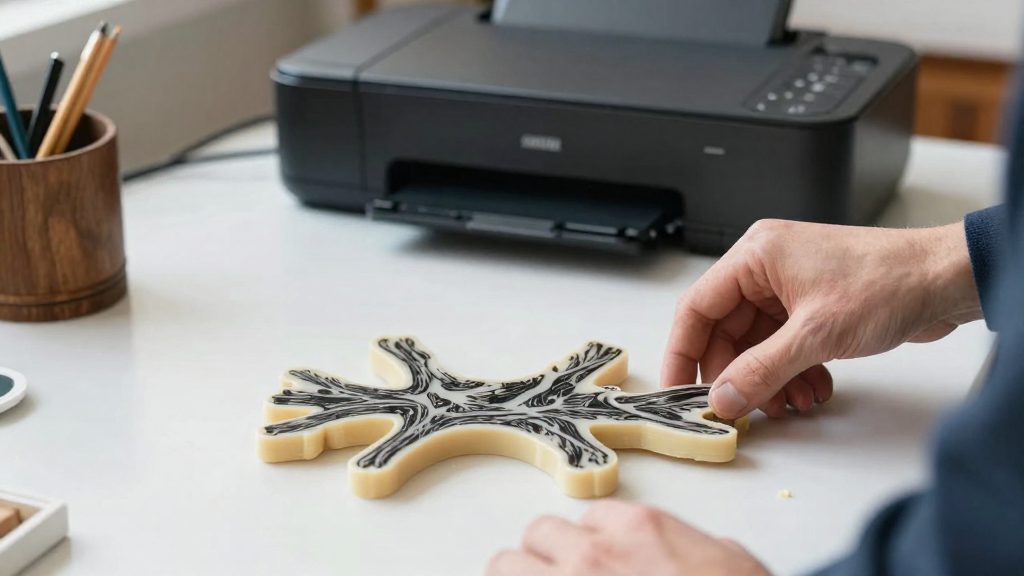
The printed pattern is not the piece you wear. The finished ring, pendant, or earring is cast metal. The resin only defines the shape of that metal.
Formlabs lists Castable Wax Resin as suitable for prototyping and fitting, but does not recommend it for final or functional parts. A printed pattern is therefore useful for checking size and fit before you commit to casting, but it should not be worn as jewelry.
| Item | Formlabs guidance | Wearable? |
|---|---|---|
| Printed Castable Wax Resin pattern | Prototyping and fitting | No, not as a final part |
| Cast metal piece | Final piece made through investment casting | Yes, this is the finished jewelry |
Because the guidance covers fitting only, do not keep a printed resin piece against the skin, even if it looks finished.
Which Jewelry Designs Work Best?
Castable resin suits jewelry designs where the printed pattern carries the detail. Formlabs recommends its Castable Wax Resin for detailed patterns, including filigree, pavé geometries, thin walls and fine surface details. The printed pattern defines the intended detail, but investment preparation, burnout and metal filling determine how faithfully that detail appears in the cast piece.
Filigree and pavé geometries
Filigree is an open lattice of thin strands. Each strand and gap must be resolved on the printed pattern, because the metal piece can only reproduce what the pattern contains.
Pavé geometries are dense fields of small, closely spaced elements. Formlabs names both families as suitable for detailed jewelry patterns.
Before you invest in a full run, print one test pattern of each geometry at the final size. Inspect the strands and gaps under good light to confirm they are open and continuous.
Thin walls and fine surface details
Formlabs lists thin walls and fine surface details alongside filigree and pavé as features the resin is recommended for. Engraved texture and small raised lettering are typical examples of fine surface detail in jewelry.
Check wall thickness in your CAD model before slicing, so thin sections are designed deliberately rather than discovered on the printed pattern.
Formlabs’ instructions cover its own printers. Verify that the resin is compatible with your specific MSLA printer separately, using the resin and printer manufacturers’ documentation, before you print patterns for casting.
Castable Resin Versus Traditional Wax
Printed castable resin and carved or injected wax are both used to create the pattern that is later replaced with metal, but they differ in composition and in how they leave the investment during burnout. Formlabs’ Castable Wax 40 product is the reference point for ash behaviour.
Composition
A printed pattern is built layer by layer from a photopolymer, whereas a traditional pattern is carved from a solid wax block or injected into a rubber mould. Formlabs Castable Wax Resin contains 20% wax. Formlabs Castable Wax 40 contains 40% wax and, according to its technical data sheet, shows low expansion and compatibility with leading gypsum investments.
| Pattern type | Composition | Preparation before investment |
|---|---|---|
| Formlabs Castable Wax Resin | 20% wax, photopolymer | Washing, no post-curing |
| Formlabs Castable Wax 40 | 40% wax, photopolymer | Per the product data sheet |
| Carved or injected wax | Wax block or injected wax | Carving or injection, no printing step |
Ash Residue
According to Formlabs (2020), Castable Wax 40 shows 0.0–0.1% ash content when measured by thermogravimetric analysis under ASTM E1131. This is a measured range for that specific product, not a guarantee that every castable resin leaves zero ash. Printed patterns should therefore be checked against the manufacturer’s data for each resin before use in a casting job.
Burnout Handling
Formlabs states that its original Castable Resin requires a different burnout process from traditional wax. The recommended approach is a gradual transition to gas, which reduces the risk of investment cracking from rapid expansion.
Printing, Washing, and Curing Your Patterns
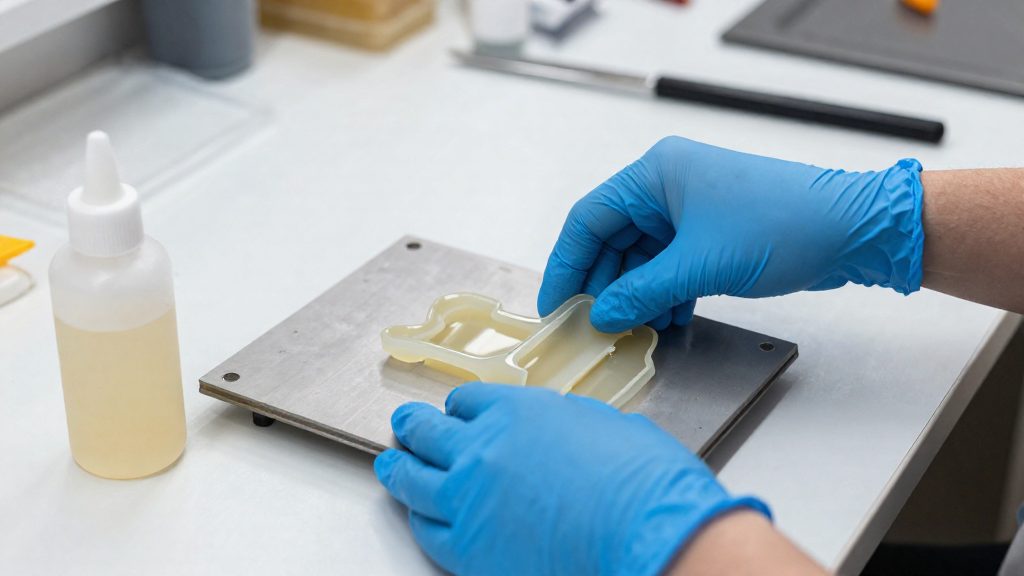
For Formlabs Castable Wax Resin, wash the pattern and let it dry completely before investment; post-curing is not required. For other castable resins, follow the specific manufacturer’s post-curing instructions. According to Formlabs, Castable Wax Resin contains 20% wax and requires washing but no post-curing before casting. Castable Wax Resin does not require post-curing before casting. Formlabs states that post-curing should not affect castability, but it may cause slight shrinkage and distortion.
Washing Before Casting
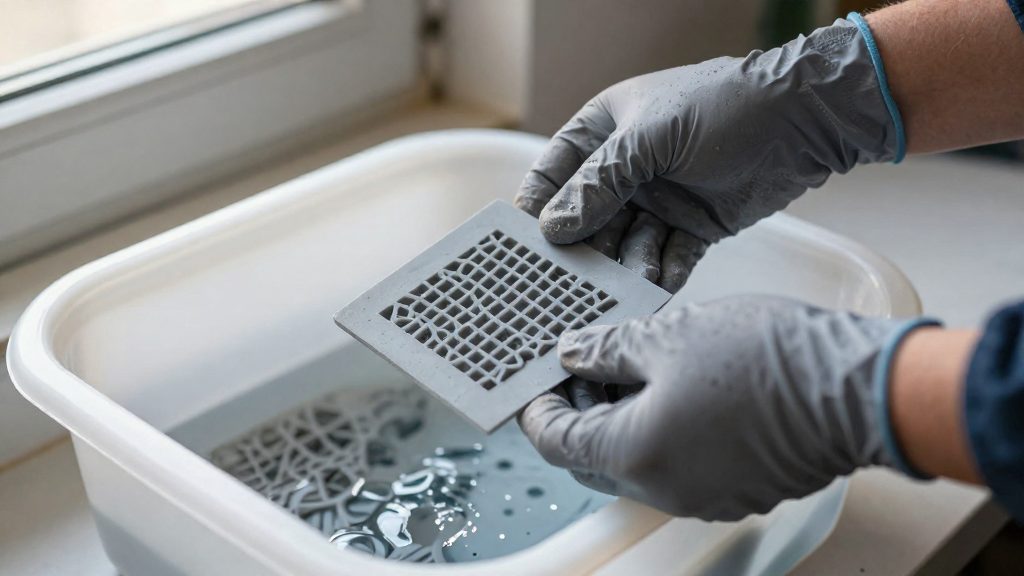
Washing removes uncured resin from the surface and from fine recesses. Filigree, pavé geometries and thin walls are the features most likely to trap resin, so check them under magnification before moving on. A clean wash is what keeps those features sharp in the final casting.
The opened sources do not establish a universal washing procedure, solvent choice or wash duration for castable resin brands and printers. Follow the resin manufacturer’s washing instructions and the settings specified for your specific printer.
Post-Curing Omitted for Castable Wax Resin
Post-curing is a UV step that fully hardens a printed part. For Castable Wax Resin, Formlabs specifies washing but no post-curing before casting. Skipping this step is intentional: the pattern goes into investment in its printed state.
Do not post-cure a castable wax pattern unless the resin manufacturer’s instructions for your specific product call for it. The opened sources do not establish post-curing requirements for castable resin brands other than Formlabs.
Formlabs’ Castable Wax 40, which contains 40% wax, is a separate product with its own data sheet. Check which resin you are using before following any post-print instructions.
Burnout Problems and Casting Defects
During burnout, the printed pattern leaves the mold and the surrounding investment must absorb the expansion that happens as it heats. Formlabs identifies concentrated expansion stress as a cause of investment breakage (Formlabs, 2021). Once the investment breaks, the mold no longer matches the pattern, and the metal poured into it carries the damage onto the finished piece.
According to the same source, this breakage can produce four visible defects:
- Filled-in engravings: fine lines and lettering are not fully reproduced.
- Stone holes: openings intended for stone settings are blocked or distorted.
- Rough surfaces: the cast surface is uneven instead of smooth.
- Pitting: small cavities appear on the cast surface.
Avoiding cracking with a gradual transition to gas
Formlabs’ original Castable Resin requires a burnout process different from traditional wax. Its recommended gradual transition to gas reduces the risk of investment cracking caused by rapid expansion (Formlabs). The practical principle is to avoid sudden temperature changes during burnout and to follow the resin manufacturer’s stepwise instructions.
Equipment and Safety for Home Casting
A printer alone does not complete the jewelry workflow. Formlabs’ jewelry casting process requires equipment beyond the printer, including a furnace, a vacuum investment machine and a casting system (Formlabs, 2021). Each stage depends on its own equipment.
Furnace, vacuum investment machine and casting system
- Furnace: used for burnout, the step that removes the pattern from the investment before metal is cast.
- Vacuum investment machine: used for the investment step, where the printed pattern is embedded.
- Casting system: the equipment that receives the metal once the pattern is gone.
No universal burnout schedule applies across castable resin brands and printers, so follow the manufacturer’s instructions for the specific material you use.
Active ventilation for indoor burnout
Formlabs’ guide specifies active ventilation for indoor burnout (Formlabs, 2021). Burnout is therefore not a step to run in a closed room without airflow.
The same handling risks apply to the resin before it is cured. According to CDC / NIOSH (2025), uncured printing resin contains acrylates and other chemicals that can cause asthma or dermatitis. NIOSH also notes that printer covers may not contain all particles and gases released during printing. Its recommended controls are:
- Ventilation, or effective particulate and gas filtration
- Appropriate protective equipment
- Gloves resistant to acrylates and isopropyl alcohol