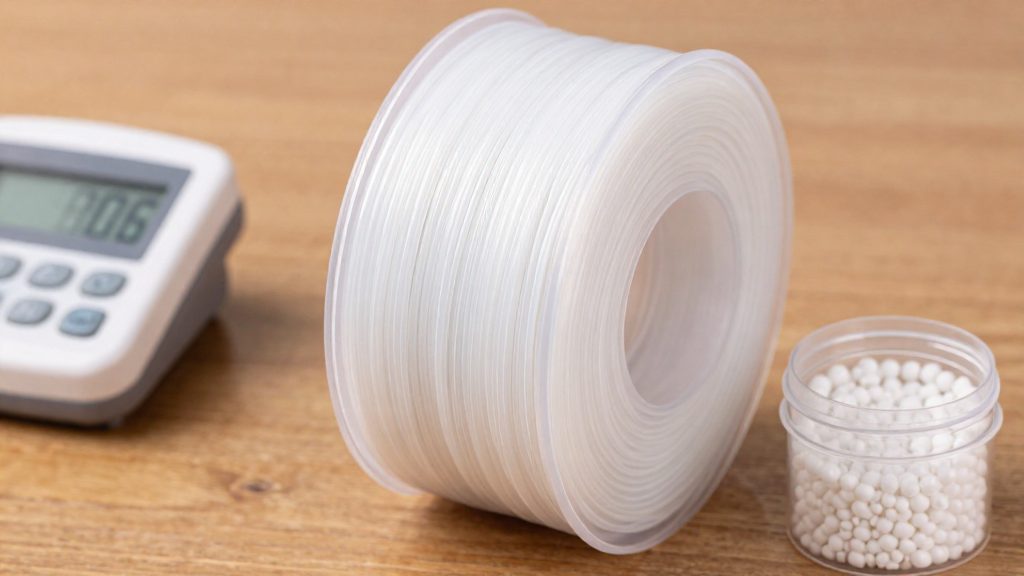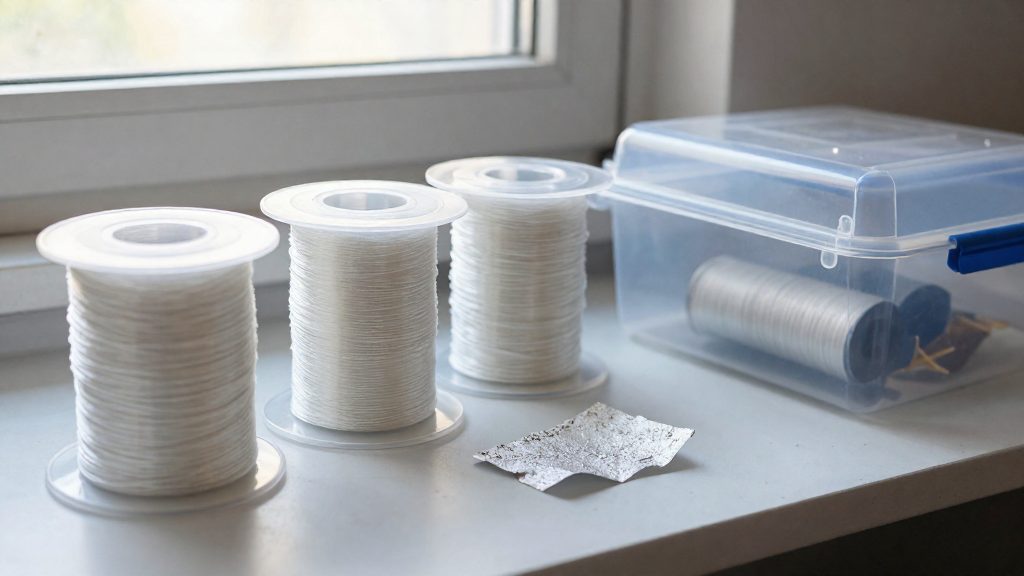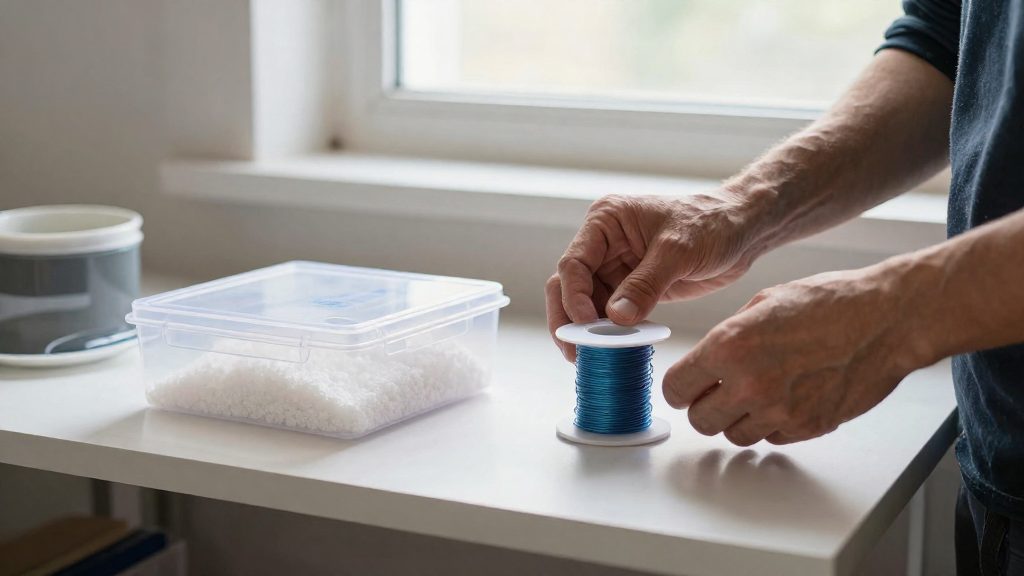
For most home setups, the best default is a closed box containing desiccant, which limits how much moisture a spool can absorb between prints. Prusa Research recommends this approach because most FFF printing materials are hygroscopic and attract water from their surroundings. Polyamide, PVA and TPU generally need drying more often than PLA, which makes a sealed box especially relevant for them.
What Is the Best Filament Storage Method?
The closed box with desiccant is the baseline option.
Prusa’s Pro Filament Drybox is a dedicated storage unit for this purpose. It uses silica gel as its desiccant and measures internal humidity and temperature. The table below summarises the three storage setups described in the sources.
| Storage option | Setup |
|---|---|
| Closed box with desiccant | Limits moisture exposure; the default approach |
| Prusa Pro Filament Drybox | Silica gel desiccant; reports internal humidity and temperature |
| Vacuum bag | Another storage option; Prusa recommends keeping desiccant inside the bag |
Storage Conditions for MatterHackers MH Build Series PETG
For MatterHackers’ MH Build Series PETG, the manufacturer specifies storage at 59–77°F (15–25°C), in a clean, dry environment, with spools kept in their original packaging (MatterHackers, 2024). These conditions describe where the spool sits between prints.
Sourced Storage Conditions
| Condition | Specification (MatterHackers PETG) |
|---|---|
| Temperature | 59–77°F (15–25°C) |
| Environment | Clean and dry |
| Packaging | Original packaging |
Limits of the Published Range
The 59–77°F range is a manufacturer value for one product, so it should not be treated as a universal target for every filament. Published guidance for this range does not give a relative humidity percentage, so the figure describes temperature and cleanliness, not a humidity limit. For any other material, check the spool label or the manufacturer’s instructions for its storage conditions.
Sealed Boxes Versus Vacuum Bags
Both options aim to keep a spool away from humid air, but they work in different ways. A sealed box is a rigid container. A vacuum bag is a flexible alternative, and Prusa recommends keeping desiccant inside the bag as well.
| Feature | Rigid sealed box | Vacuum bag |
|---|---|---|
| Storage role | Keeps spools in a closed container with desiccant | Keeps spools in a flexible sealed bag |
| Desiccant placement | Desiccant pouches placed inside the container | Desiccant kept inside the bag, per Prusa |
| Spool handling | Spools sit in the container and can be opened and closed as needed | Spools are sealed in the bag and must be taken out to be accessed |
Published guidance does not establish that vacuum storage outperforms every well-sealed container with desiccant, so the choice depends on your storage setup and how often you access the spool.
Desiccant and Humidity Monitoring
Desiccant is the component that actually pulls moisture out of a closed storage space, and a sensor tells you whether it is still working. Prusa’s Pro Filament Drybox covers both functions in one unit: it uses silica gel as its desiccant and includes an internal sensor that reports humidity and temperature, so you can read conditions inside the box rather than guessing from the room.
Silica Gel in the Prusa Pro Filament Drybox
The Pro Filament Drybox uses silica gel as its drying agent. Keeping the air inside the box dry is what limits how much moisture reaches the spool.
Internal Humidity and Temperature Measurement
The Pro Filament Drybox measures internal humidity and temperature, which gives you a direct reading of the storage environment. Monitoring the inside of the box is more informative than checking the room, because the enclosed air can differ from ambient conditions. Use the in-box reading to decide when the silica gel needs attention, and treat a rising humidity value as a signal that the storage seal or desiccant is no longer keeping the air dry.
Which Filaments Need Extra Moisture Protection?
Filament families differ in how quickly they absorb water, and that difference determines how often each one needs drying.
Prusa Research’s guidance states that polyamide (nylon), PVA and TPU generally need drying more often than PLA.
| Filament family | Relative drying frequency | Source |
|---|---|---|
| PLA | Lower | Prusa Research |
| Polyamide (nylon) | Higher | Prusa Research |
| PVA | Higher | Prusa Research |
| TPU | Higher | Prusa Research |
The relative order of sensitivity among polyamide, PVA and TPU is not specified, so check the manufacturer’s drying guidance for the specific product you own.
When to Dry a Spool Before Storage
Pre-drying decides whether a spool enters storage dry or already carrying moisture into the box. Prusa Research recommends pre-drying filament before its first placement inside a drybox, so a spool that has been sitting open on a shelf should be dried before it goes into a sealed container. Most FFF materials are hygroscopic, meaning they attract water from the surrounding air, so moisture absorbed before sealing stays trapped inside the container with the spool.
Household ovens are a common drying method, but they carry a risk. Prusa Research notes that ovens can fluctuate in temperature or lack settings low enough for filament, which can damage the material. If you use one, Prusa advises placing an external thermometer inside the oven to read the actual temperature rather than relying on the dial.
After drying a spool, move it into a filament container with desiccant pouches, as PrintDry recommends. According to PrintDry (2020), its FD2003 manual recommends moving dried spools into filament containers with desiccant pouches once drying is complete, so the spool goes directly from the dryer into a sealed box.
Keeping Filament Dry While Printing
Moisture picked up by filament during a print shows up in the part itself. According to Prusa Research, moisture in filament can cause poor surface quality, weak layer adhesion, blobs, and bubbling during extrusion; these symptoms can indicate moisture problems but do not by themselves confirm the cause.
Recognising Moisture Defects
- Poor surface quality: a rough or uneven outer surface.
- Weak layer adhesion: layers that bond poorly to each other, so the part is more fragile.
- Blobs: irregular bulges of material on the print.
- Bubbling during extrusion: bubbles forming in the molten filament as it leaves the nozzle.
When several of these appear together on a material that printed cleanly before, check the spool’s storage conditions first, before changing slicer settings.
Printing Directly from the Pro Filament Drybox
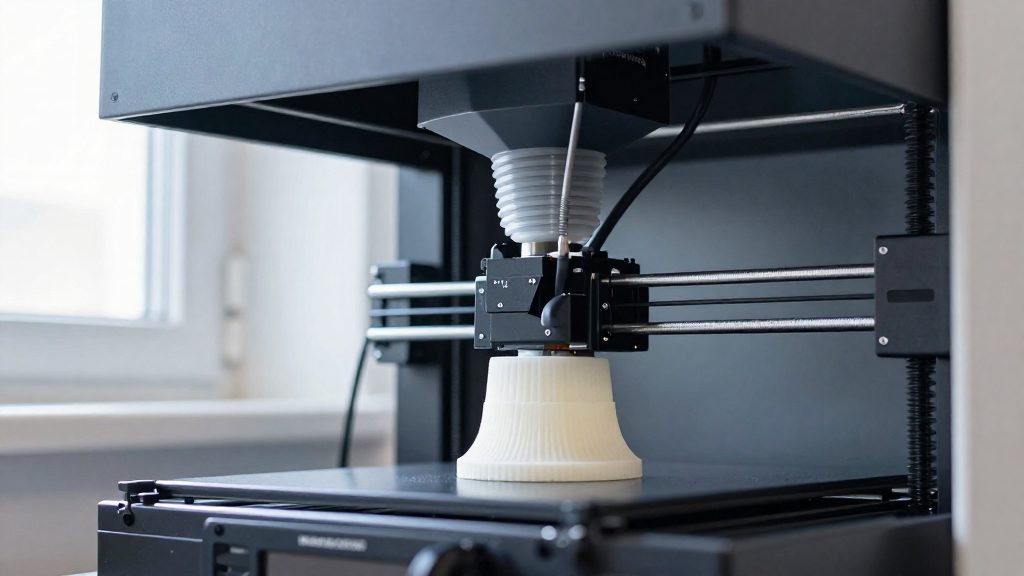
Prusa’s Pro Filament Drybox allows printing directly from the box, so the spool can stay inside its dry environment while the printer draws filament from it. This removes the step of moving the spool to an open shelf between storage and printing.
To use it this way:
- Load the spool inside the box and route the filament out through the box’s opening to the extruder.
- Keep the lid closed when the printer is not being loaded or unloaded.
- Reopen only when changing spools, so the interior stays closed during long prints.
Frequently asked questions
What drying settings do Prusa and PrintDry use?
Prusa specifies 45°C for six hours for Prusament PLA, while PrintDry’s FD2003 manual lists 55°C for more than three hours under its stated test conditions. These are not interchangeable settings, so use the temperature and time from your filament manufacturer’s instructions.
How often should I replace the desiccant in my storage box?
There is no universal replacement interval for desiccant. Follow the instructions on your desiccant product’s label, and contact its manufacturer if the instructions are unclear.
Do I need to dry a spool again before every print?
Prusa recommends pre-drying a filament before its first placement inside a Pro Filament Drybox. If a stored spool starts showing poor surface quality, weak layer adhesion, blobs or bubbling, re-drying it is the next step to try.