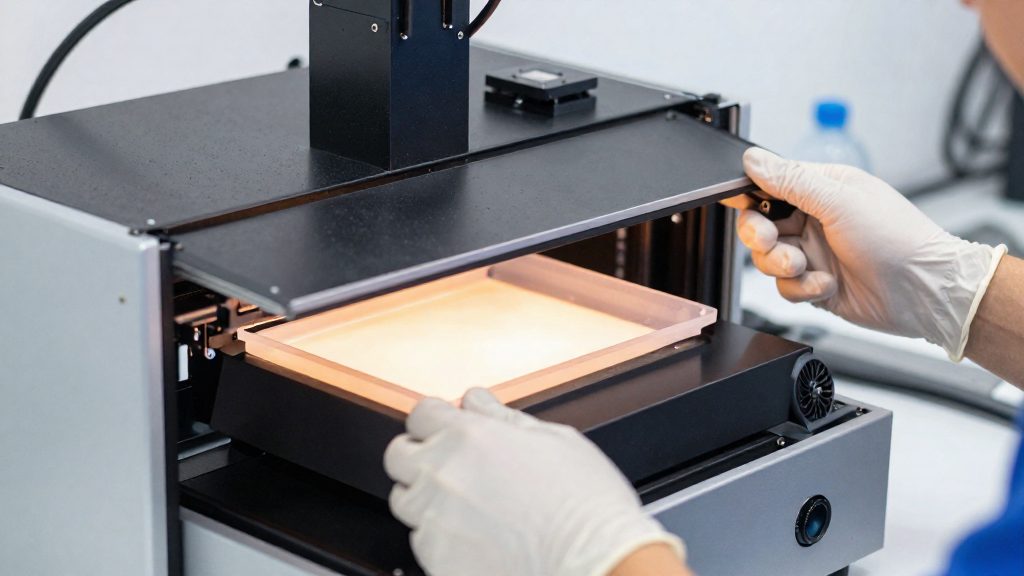
Resin printing is a chemical-exposure risk that needs managing, not just a smell to vent. Resin printing is a chemical-exposure risk that needs managing, not just a smell to vent. There are two routes of exposure: direct contact of liquid resin with skin or eyes during handling, and fumes released into the room air.
What are the skin and eye contact hazards of liquid resin?
Skin contact: irritation, burns and blisters
Uncured resin can irritate skin and sometimes causes burns or blisters. Because the liquid stays hazardous until it is cured, any contact with unhardened resin should be treated as a chemical exposure.
Eye contact: risk of permanent damage
Eye contact is the most severe outcome listed in the source, since it could cause permanent damage.
Repeated exposure: sensitization
Many resins are sensitizers, so repeated exposure can cause a mild allergic reaction. Treat sensitization as a cumulative risk: the fewer times skin touches uncured resin, the lower the build-up.
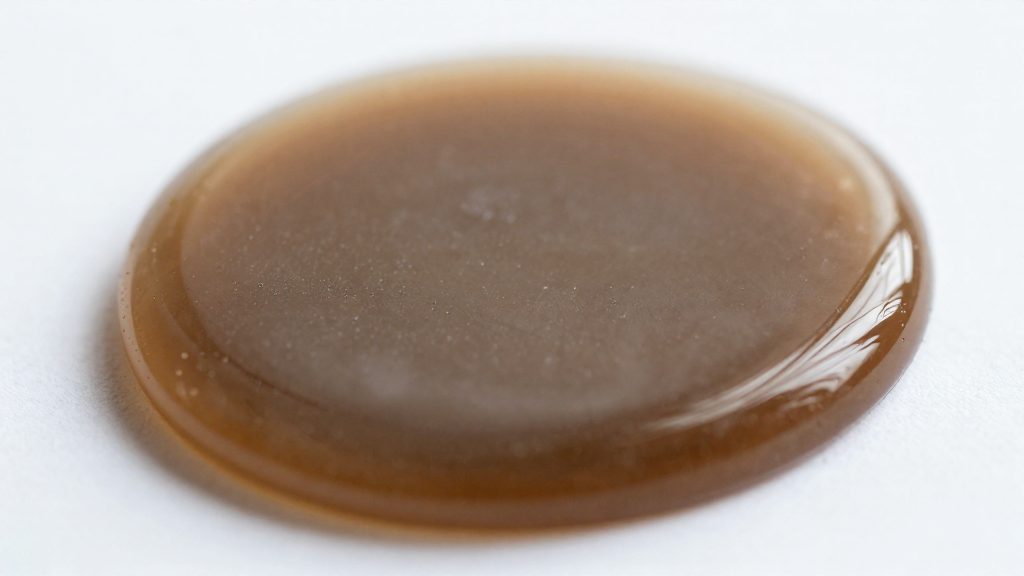
What fumes does resin actually release?
Resin printing releases fumes into the room air, and those fumes can affect indoor air quality. The effects are not limited to the person handling the resin, because the fumes spread through the space where the printer sits.
Fumes that affect indoor air quality
The fumes come from resin that is used in printing and curing, which means exposure can occur even when you are not touching the resin. Because the fumes enter the air of the room, anyone spending time in that space can be affected. Indoor air quality is the main concern, not only the immediate area around the printer.
Headaches, fatigue and breathing problems
According to 3DPrint.com (2021), resin fumes can cause headaches, fatigue and breathing problems. These are the three health effects named for this type of exposure. Headaches and fatigue are easy to attribute to an ordinary day, so they should not be dismissed when they occur during or after resin work. Breathing problems need the fastest response. If they occur, stop work, leave the room for fresh air, and seek urgent medical care for any breathing difficulty, even if it seems mild or eases.
Warning signs of fume exposure indoors
If you notice these symptoms while or after you print or cure resin indoors, stop work, get fresh air and improve ventilation before resuming. Seek medical advice for any of these symptoms that appear with resin work, and get urgent medical care for any breathing difficulty. Do not resume printing until you have fresh air and better ventilation. The exposure is linked to the room air, so symptoms that appear only when a resin printer is running deserve attention.
How much ventilation do you really need?
For resin printing, the preferred setup is a ventilation hood that captures fumes at the source. The printer should not be run in a closed room without active extraction. When a hood is not practical, the fallback is to work near an open window with a fan that moves air out of the room. The source does not give airflow rates or minimum fan sizes, so the setup below is described by function rather than by numbers.
Option 1: the ventilation hood
A hood is the first choice because it takes fumes away from the person before they spread through the room. Place the printer and any open resin containers inside or directly beneath the hood’s capture area, so the airflow passes over the source and not past it. Keep the hood running for the full duration of a print and while you handle resin, since the fumes are released during both.
Option 2: an open window with a fan
If you cannot install a hood, work close to an open window and point a fan so it pushes air out through the opening rather than blowing fumes across your face or into the rest of the room. Keep the printer on the window side of the room, and keep your working position between the printer and the window. Ventilation in this setup depends on a clear exit path for the air, so avoid blocking the window with furniture or curtains.
Does the washing and curing station matter?
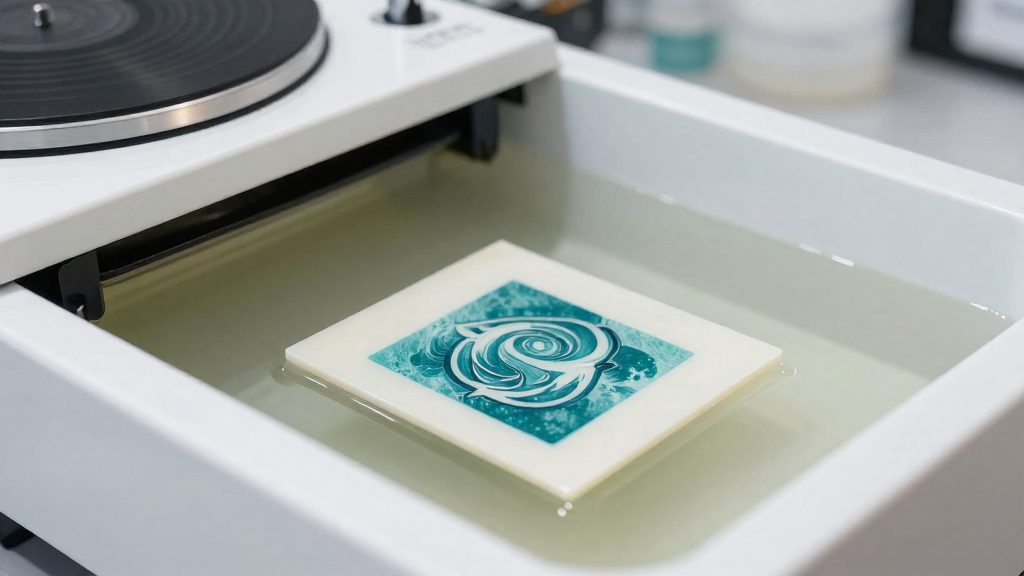
Yes. Washing and curing add handling steps where the printer is no longer the only source of exposure. A print leaving the build plate still carries uncured residue on its surface, and that residue is the main skin-contact risk at this stage.
Residue left on parts after washing
Parts are often handled while still coated with uncured resin. Sorting prints, removing supports, and moving parts between containers all bring the hands into contact with that film. Frequent handling of residue-covered parts therefore carries more risk than a single brief contact.
Residue transfer to tools and surfaces
Tweezers, scrapers, and wash containers pick up resin from parts and carry it onto the bench and the next object touched. This creates a secondary contact route: a tool or surface can expose you even when the part itself has been set aside.
Curing station use on printed parts
A curing station exposes printed parts to UV light until the resin becomes solid. Curing does not remove residue, so parts enter this step with their surfaces still uncured and handled. The station should not be treated as a neutral box.
Which protective gear should you wear?
Two items cover the main contact risks when handling uncured resin: goggles and nitrile gloves. 3DPrint.com (2021) advises wearing both whenever you handle resin, so put them on before you open a container, pour resin into a vat or touch anything that has been in contact with liquid resin.
Goggles protect your eyes. Liquid resin can splash during pouring and filling. Goggles guard against that risk, which skin protection cannot. Keep them on for the whole time the resin container is open, not just during the pour.
Nitrile gloves protect your skin. The gloves create a barrier between the liquid and your hands. Wear them for every task that involves resin, including handling the printer’s resin tank and the tools you use to transfer it.
Goggles and gloves do different jobs, so one does not replace the other. Gloves do not protect your eyes from splashes, and goggles do not prevent skin contact with resin on your hands.
Where should you put a resin printer at home?
The main factor in choosing a room for a resin printer is airflow. A room should be chosen first for whether it has a route for air to leave the building, and only second for whether the desk fits.
Because the fumes affect the air in the whole room, not just the spot where the printer sits, the room’s other uses matter. A practical approach is to avoid rooms where people sleep or spend long periods, and to prefer a space where the printer can be moved near a window without blocking the fan’s path.
Keep absorbent material within reach of the printer so you can contain a spill quickly, and wear gloves when you use it.
How do you store and dispose of resin safely?
Safe storage and disposal start before the bottle is opened. According to 3DPrint.com (2021), you should read the manufacturer’s safety data sheet (SDS) before opening any resin container. The SDS lists the hazards of the exact product in your bottle, so it is the reference to follow for handling, storage and disposal.
For storage, keep resin in its original container and close it after every use. Leftover resin should go into a clearly labelled container, not an unmarked bottle, so nobody mistakes it for water or another liquid. Closed containers also reduce how often you come into contact with the material.
Liquid leftover resin has two permitted routes, absorbing it or curing it under UV light, and the drain is not one of them:
| Resin state | Permitted action | Not permitted |
|---|---|---|
| Liquid, leftover or spilled | Absorb it with absorbent material, then handle that material as the SDS directs | Pouring it down the drain |
| Liquid, leftover | Cure it under UV light until it is solid | Pouring it down the drain |
| Solid (cured) | Dispose of it according to the SDS and your local waste rules | Treating it as liquid waste |
Absorbing and curing both turn the liquid into a form you can handle more safely. Curing turns the liquid into a solid under UV light, so the material is easier to handle. Check the SDS or the resin maker’s instructions for exact cure times.
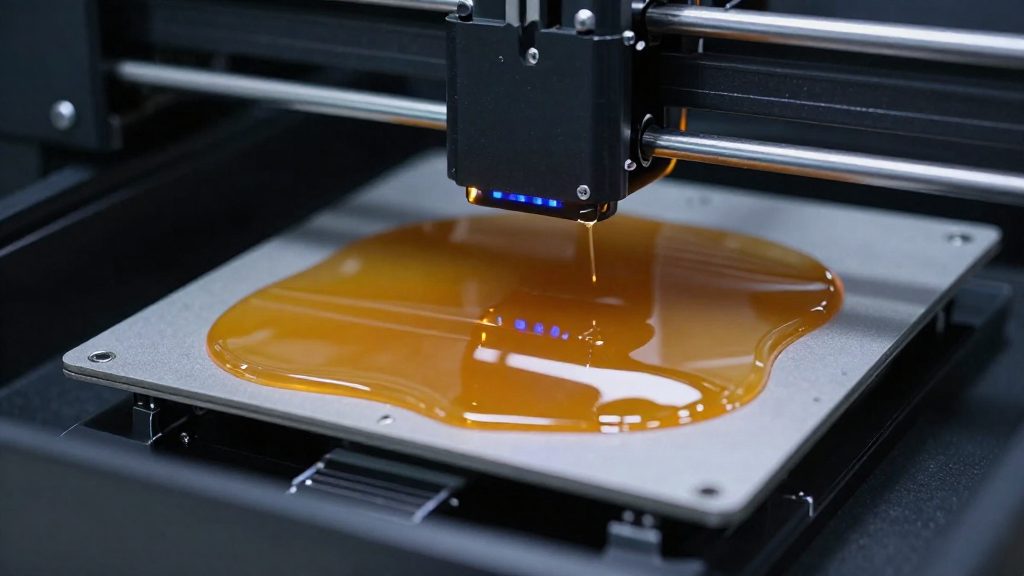
Never pour leftover resin down a drain, whatever type of resin it is. If a container cracks or leaks, absorb the spill first and then follow the same routes for the absorbent material.
Frequently asked questions
What kind of ventilation should I use for resin printing indoors?
According to 3DPrint.com (2021), a ventilation hood is the best option for resin fumes. If a hood isn’t practical, work near an open window and run a fan to move air out of the room.
What protective gear do I need when handling resin?
Wear goggles and nitrile gloves whenever you handle liquid resin, including when you pour, transfer or clean up spills.
Should I read anything before opening a resin bottle?
Yes. Read the manufacturer’s safety data sheet (SDS) before opening the container, since it sets out the hazards and handling rules for that specific product.