Is PETG or PLA better outdoors?
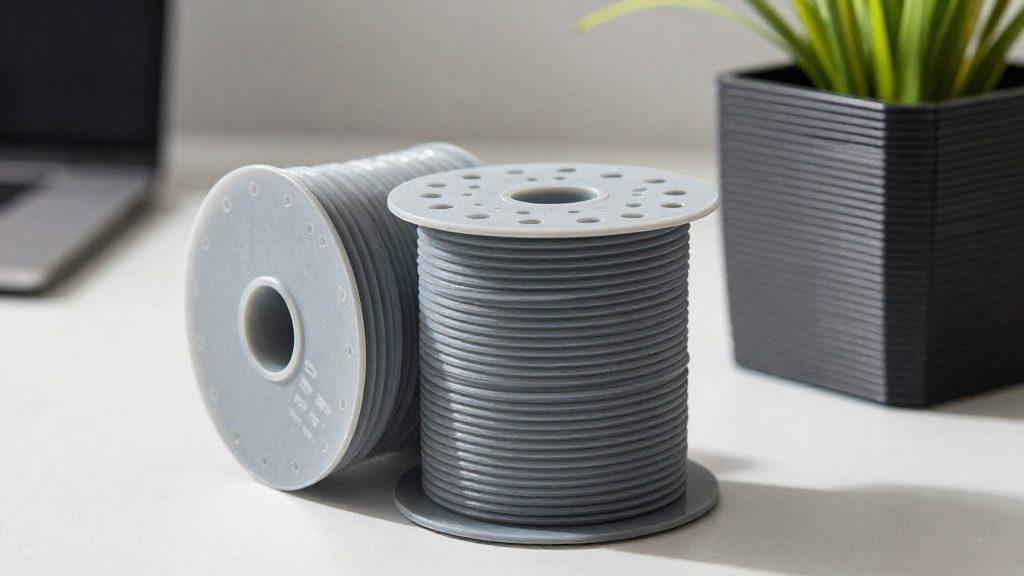
For most outdoor parts, PETG is the better choice of the two. It is the recommended option for most functional outdoor parts. PLA fits shaded, decorative or temporary prints. Standard PLA is generally not the preferred material for prolonged exposure to heat and weather, so it suits short-term, low-demand roles. The ratings below explain why the choice depends on the job rather than on one outdoor score.
FormFutura B.V. (2026) publishes a separate rating for each material, and the ratings measure different properties:
| Material | Rating | What the rating measures |
|---|---|---|
| PLA | 2/5 | Heat and UV resistance, for temporary, low-demand outdoor use only |
| PETG | 4/5 | Outdoor suitability at moderate exposure; heat resistance is rated separately at 3/5 |
| ASA | 5/5 | Outdoor suitability, with excellent UV and weather resistance |
Why the ratings are not one outdoor score
PLA’s rating covers heat and UV resistance, and FormFutura states that it is not an outdoor-suitability score. PETG’s rating is an outdoor-suitability rating, but only at moderate exposure, and its heat resistance is scored on its own scale. Adding or ranking these figures as a single outdoor score would mix a heat-and-UV measure with an exposure-based measure. Read each rating against the property it describes, then match it to the exposure the part will face.
Temporary, low-demand use versus long-term parts
Temporary, low-demand use is where PLA makes sense: shaded, decorative or short-lived prints where heat and UV exposure stay limited.
PETG is described as more durable, impact resistant and flexible than PLA. If the part faces prolonged sun and weather, ASA is the better choice: FormFutura rates it 5/5 for outdoor suitability, with excellent UV and weather resistance.
How does UV exposure affect each filament?
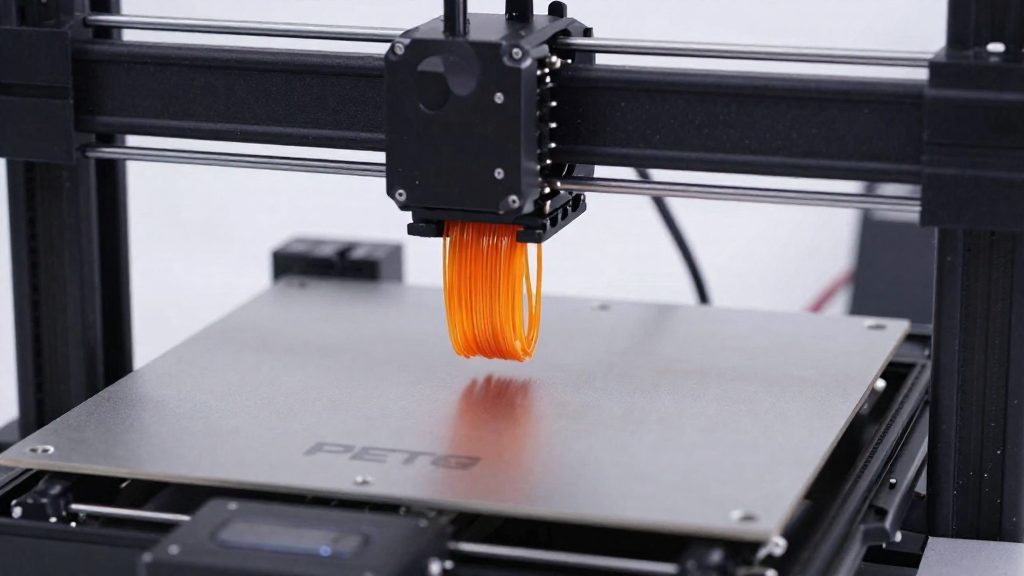
Ultraviolet light is the main long-term threat to outdoor prints in PLA and PETG, and the two materials degrade differently. According to 3DPrinterly (2023-11-13), PLA breaks down in sunlight mainly through its color pigments and may lose strength over long periods. Sovol (2026-07-23) ranks standard PLA as the least UV-stable of the materials it compares over long exposure.
Standard PETG lasts longer under UV but is not permanent. It can still discolor or become brittle over time. FormFutura B.V. (2026) states that standard PETG does not match ASA’s long-term UV stability, and that UV-stabilized PETG grades perform better.
| Filament | Standard grade under UV | UV-stabilized grade |
|---|---|---|
| PLA | Pigments degrade; strength may fall over long periods | Not stated |
| PETG | Can discolor and become brittle over time | Performs better than standard PETG |
Heat in the sun: where PLA fails
PLA loses its shape at a much lower temperature than PETG, and that gap determines where a printed part can stay outdoors. According to Sovol (2026), the approximate heat-deflection range is about 50–60°C for PLA and 70–90°C for PETG. These are not guaranteed service temperatures. They mark the point where a part starts to deform, so a PLA part in a warm spot can soften well before it looks damaged.
Sun adds heat on top of the air temperature. Direct sun heats a part’s surface, and dark colors absorb more solar energy than light ones, so a dark PLA part can get much hotter than the surrounding air. The practical effect is clear: a black PLA bracket on a sunny ledge is in a much worse position than a white one in the shade.
Thin sections are the second risk factor. PLA is more likely to soften in direct sun when a part has thin walls. A thin clip, bracket or cover holds less material to resist deformation than a thick printed wall, so it reaches its softening range sooner and sags or warps first.
To reduce the risk with PLA:
- Avoid dark colors for any PLA part that receives direct sun.
- Give load-bearing or exposed parts thicker walls than the minimum your slicer allows.
- Keep PLA parts out of enclosed, sun-facing spaces such as car dashboards or sealed window sills, where heat builds up.
What about rain and moisture?
Water affects a filament in two ways: a finished part can take on water from rain or humidity, and the filament on the spool can absorb moisture before it is printed. According to FormFutura B.V. (2026), PETG has very good moisture resistance and toughness, which makes it the stronger option for parts that will stay damp. The consulted sources do not give a comparable moisture-resistance rating for PLA, so the comparison rests on PETG’s stated properties rather than a measured PLA figure.
Toughness adds to that advantage for parts that are handled, bumped or exposed to repeated wet and dry cycles.
Moisture problems also show up in the print itself. In PETG, they appear more visibly as:
- Stringing: thin, hair-like strands of plastic bridging between separate areas of the print.
- Rough surfaces: a grainy or uneven finish on the outer walls.
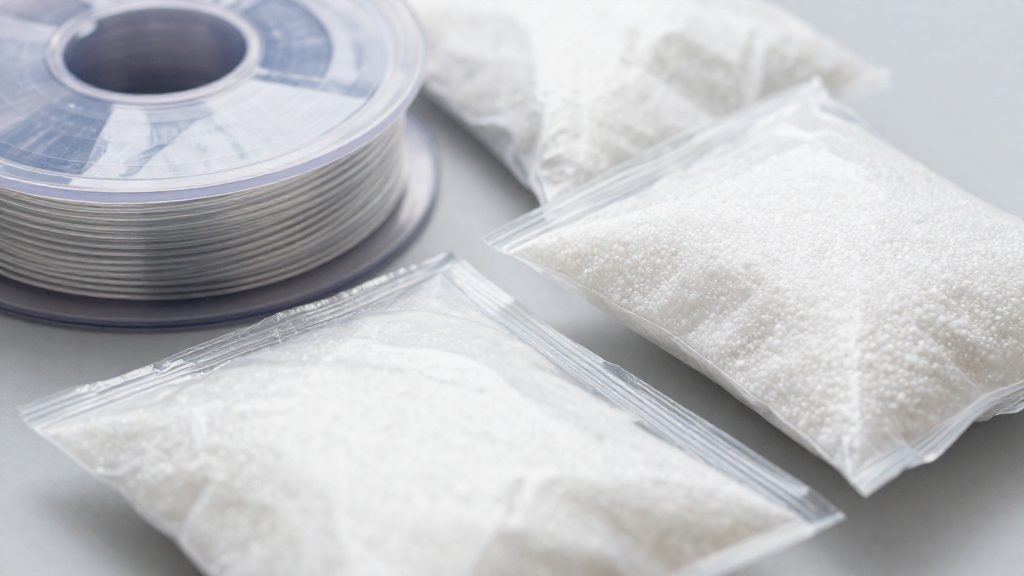
If a PETG print that came out cleanly before now shows stringing or rough walls, check the spool before changing slicer settings. Moisture in the filament is one possible cause. If a dry spool does not fix the problem, check temperature, retraction and cooling settings as well. Keep spools sealed when not in use, and keep them away from damp areas such as a basement shelf or an open bin in a humid room.
Is PETG hard to print?
PETG is moderately harder to print than PLA. According to Sovol (2026-07-23), PLA is easier to print and has a low warping risk, while PETG’s difficulties come mainly from bed adhesion and stringing. Stringing is partly a moisture issue, covered in the moisture section. This section focuses on the bed, the first layers, and print temperature and cooling.
Bed adhesion and the first layer
PLA’s low warping risk means it usually sticks to the bed with less effort. PETG needs more attention at the start of the print, so check these points before each session:
- Level the bed and recheck the first-layer height.
- Clean the build surface so the first layer can grip it.
- Watch the first layer closely. If it lifts or shifts, adjust bed adhesion before changing anything else.
Print temperature and cooling
Start from the values in the filament manufacturer’s datasheet for the exact spool you are using. Adjust one setting at a time so you can see which change affects the first layer and the rest of the print.
Layer adhesion and strength
Print settings can also affect how strong a finished part is, so test functional prints before relying on them.
When is PLA still fine outside?
PLA stays acceptable outdoors only for temporary, low-demand use. FormFutura B.V. (2026) rates PLA’s heat and UV resistance at 2/5 and limits it to that kind of application. The practical question is therefore how long the part will stay outside and how much load it must carry.
Shaded and decorative prints
PLA suits parts placed out of direct sun. Examples include ornaments in a sheltered spot, short-term fixtures and signs that will be taken down after use.
Low-load parts where softening will not cause failure
For a part with no structural role, softening mainly changes its appearance and shape. A decorative piece that sags slightly on a hot afternoon is an acceptable outcome, while a load-bearing clip or bracket is not, because a small loss of stiffness can lead to failure.
Decision criteria: exposure duration and mechanical load
Check two factors before printing in PLA:
| Factor | Stay with PLA | Move to PETG or ASA |
|---|---|---|
| Exposure duration | Temporary, removed after use | Long-term outdoor installation |
| Mechanical load | No structural role | Functional part that must keep its shape under load |
| Sun and moisture | Shaded, dry location | Direct sun, dark colors, thin sections or moisture exposure |
When should you choose ASA instead?
Choose ASA when a functional part must stay outdoors for years, exposed to sun, rain and temperature swings. FormFutura B.V. (2026) rates ASA 5/5 for outdoor suitability, with excellent UV and weather resistance. It also resists heat better than PETG, so it suits parts that remain in the weather continuously rather than occasionally.
The main difference from PETG is long-term UV stability. The gap matters most for parts with a long service life, where surface and strength loss would accumulate over years.
Heat resistance is the second reason to switch. ASA tolerates higher temperatures than PETG, which has a heat-deflection range of about 70–90°C. That figure is an approximation, not a guaranteed service temperature.
Use this rule of thumb:
- PETG: most functional outdoor parts at moderate exposure, especially where moisture matters.
- PLA: shaded, decorative or temporary prints only.
- ASA: functional parts that must last years in open weather.
Frequently asked questions
Can a PLA part stay outside in direct sun for a whole summer?
Standard PLA is not a good fit for that. Sovol (2026) puts its heat-deflection range at roughly 50–60°C, and PLA is more likely to soften in direct sun, especially dark colors and thin sections. For parts exposed all season, ASA or PETG is the safer starting point.
Why does my PETG print look stringy with a rough surface?
These defects are often a sign of moisture in the filament. Sovol (2026) notes that moisture problems show up more visibly in PETG as stringing and rough surfaces than in PLA. Check the spool’s storage conditions before adjusting temperature or retraction settings.
Is UV-stabilized PETG worth choosing over standard PETG?
Yes, if the part will see sunlight. FormFutura B.V. (2026) indicates that standard PETG does not match ASA’s long-term UV stability, and UV-stabilized grades perform better. Check the manufacturer’s datasheet for the exact grade you buy.