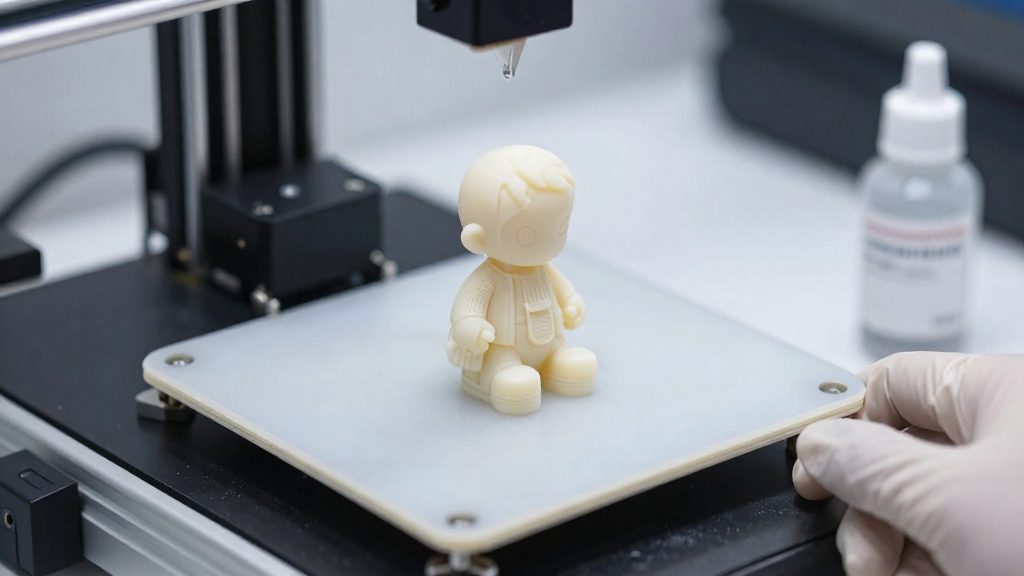
Published guidance says resin 3D printers are not for children. The Makers101 guide, dated 2026-07-30, states that uncured resin is an irritant and sensitizer and that resin cleanup is an adult job from start to finish. Because of those hazards, a resin printer should stay out of children’s hands at every stage of use.
Is resin 3D printing safe for kids?
What the published guidance says
The Makers101 guide puts children and resin printers in separate categories. It says resin printers are not for children, and it reports that Prusa’s guidance advises against letting kids handle uncured resin prints. The guide does not give a minimum age for resin use, so the limit is an exclusion rather than an age threshold.
Cleanup is an adult task
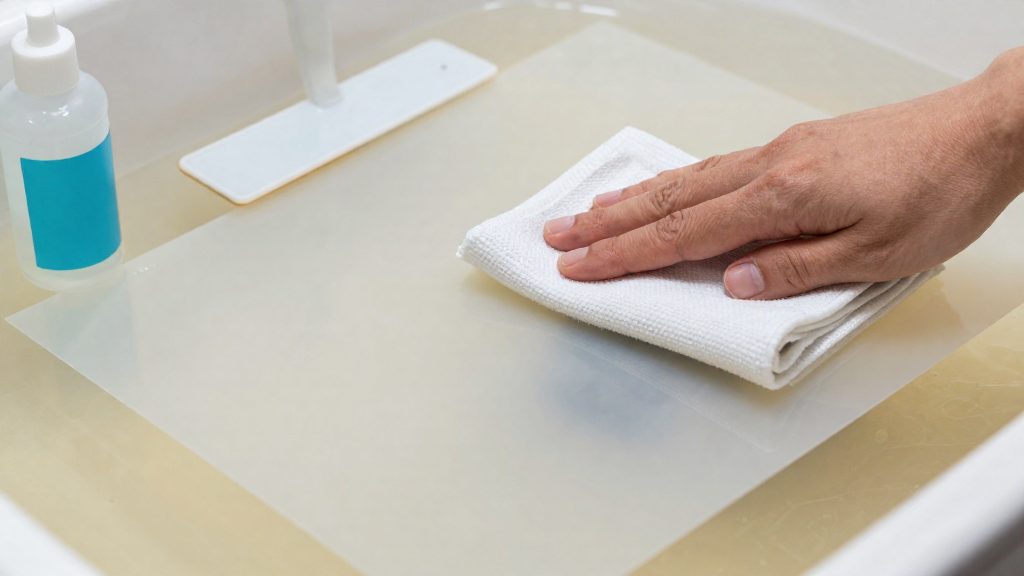
According to the same guide, resin cleanup is an adult job from start to finish. That covers the full sequence, from opening the vat and removing a print to washing it and finishing the part. Children may take part in FDM printing under supervision from about age 8, with an adult handling the hot parts, but that allowance does not extend to resin.
Why the workplace guidance does not settle home use
Employment and Social Development Canada (Government of Canada, 2022-09-09) lists resin toxicity, residues, lasers or UV light, and VOCs among the hazards of resin 3D printing. That guidance is written for workplaces and is explicitly not guidance for homes. Read it as a checklist of hazards that exist, not as a standard that makes resin printing acceptable in a household with children.
| Source | Date | Scope | Position on children and resin |
|---|---|---|---|
| Makers101 guide | 2026-07-30 | Resin and FDM printing guide | Resin printers are not for children; resin cleanup is adult-only from start to finish |
| Employment and Social Development Canada (Government of Canada) | 2022-09-09 | Workplace occupational guidance, not home guidance | Lists resin hazards; does not address home use |
What makes liquid resin hazardous
Uncured liquid resin is a chemical mixture that causes harm through direct contact, before it is ever cured. For a home setup, three effects matter most: sensitization, skin irritation with burns, and eye damage. These are contact hazards, separate from the vapours released during curing, which are covered in the ventilation section.
Resin as a sensitizer
Many resins are sensitizers, meaning they can cause the body to react allergically to them. According to 3DPrint.com (2021), prolonged exposure can cause a mild allergic reaction. Because the effect builds from exposure over time, avoiding repeated skin contact matters as much as avoiding a single large splash.
Skin irritation, burns and blisters
Resin can irritate the skin and, in some cases, cause burns or blisters. Contact is most likely during routine tasks: lifting a print off the build plate, handling a part that still carries liquid, and pouring resin back into a bottle. Each of these steps brings the hands close to the liquid, so the skin is exposed even when the printer is working normally.
Eye damage
Eye contact with uncured resin could cause permanent damage. Skin contact can cause irritation, burns or blisters, and sensitization. Eye contact could cause permanent damage. The risk is highest when resin is splashed during pouring, stirring, or wiping the build plate, because these actions can send droplets toward the face.
Why children should not handle uncured resin
Makers101 (2026) states that resin printers are not for children. The guide describes uncured resin as both an irritant and a sensitizer, and it says resin cleanup is an adult task from start to finish. Prusa’s guidance, as cited in the same guide, advises against letting children handle uncured resin prints. This contrasts with FDM printing, where the same guide says a child from about age 8 can take part under supervision.
Are cured resin prints safe to handle?
Liquid resin and cured resin present different handling risks. The main concern in the sources is the uncured material: Makers101 (2026-07-30) describes uncured resin as an irritant and sensitizer, and says resin cleanup is an adult job from start to finish. Once the printer’s laser or UV light has hardened the resin, the part is no longer a liquid that can spill, drip, or be poured out.
The points below cover handling practice rather than measured risk.
Air quality matters most during printing. Employment and Social Development Canada (2022-09-09) notes that hardening resin with a laser or UV light can release volatile organic compounds (VOCs). The sources do not say whether finished parts keep releasing VOCs, so this guidance cannot be read as showing that cured parts are harmless.
For finished parts, the practical steps are:
- Keep uncured resin away from children. Prusa’s guidance, as cited by Makers101, advises against letting children handle uncured resin prints.
- Wash and post-cure parts according to the resin manufacturer’s instructions, so the surface is fully hardened before the part is handled.
- Treat small parts as a choking hazard for young children. Makers101 lists small printed parts as a choking hazard in its FDM section. The sources do not say whether this applies equally to small resin parts, so err on the side of caution with very small pieces.
Why FDM with PLA is the lower-risk choice
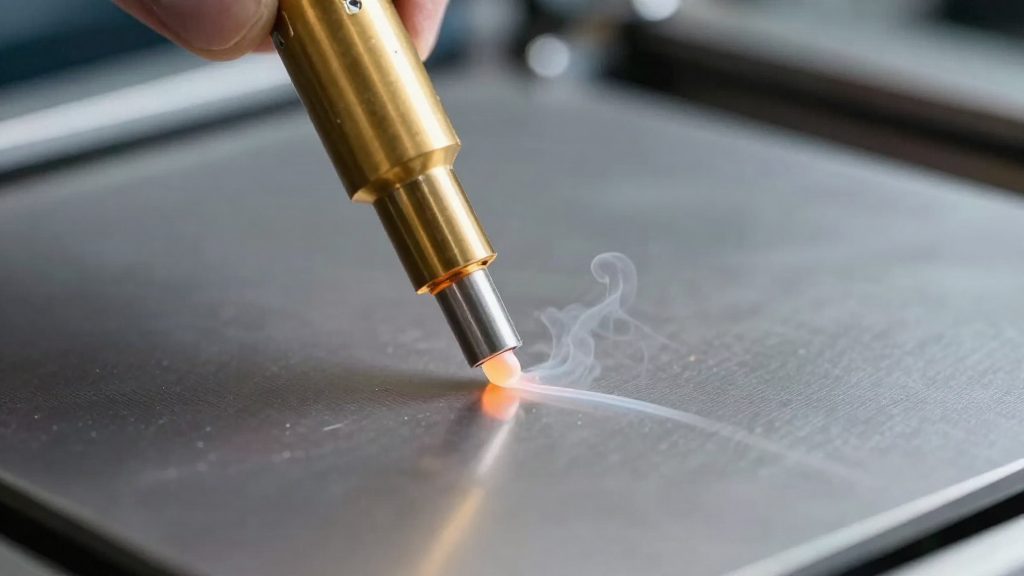
Filament printing avoids the hazards that come from handling liquid chemicals and curing them with light. A resin printer hardens liquid resin with a laser or UV light, and this process can release volatile organic compounds (VOCs). The uncured liquid is also a contact hazard in its own right. Many resins are sensitizers: prolonged exposure can cause a mild allergic reaction, and resin can irritate skin and, in some cases, cause burns or blisters. Eye contact could cause permanent damage.
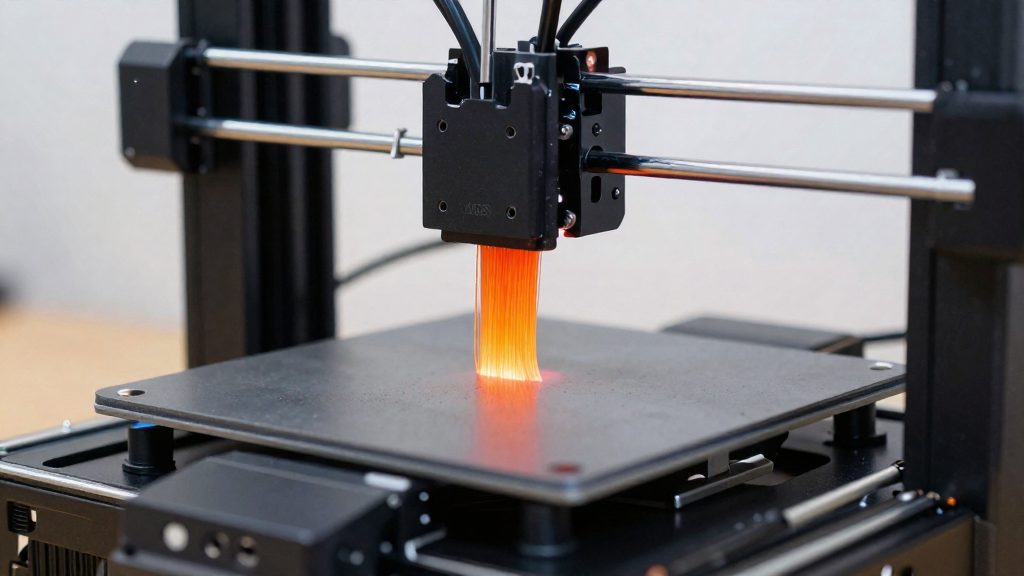
A filament printer melts plastic through a heated nozzle and does not use a curing light or any liquid chemical.
| Hazard | Resin printing | FDM printing with PLA |
|---|---|---|
| Liquid chemical to handle | Uncured resin, an irritant and sensitizer | Not used |
| Curing source | UV light or laser hardens the resin | Not used |
| VOCs | Released during curing | Released; PLA still emits VOCs and ultrafine particles |
| Skin and eye contact | Irritation, sensitization, burns or blisters, possible eye damage | Not listed as a contact hazard |
| Child suitability | Not for children | From about age 8, under supervision |
According to Makers101 (2026-07-30), resin cleanup is an adult job from start to finish, because uncured resin is an irritant and sensitizer. FDM does not carry that cleanup step, but it has its own hazards. The nozzle runs above 200°C, small printed parts are a choking hazard, and standard PLA is not food-safe. Choosing PLA over ABS also matters, since ABS emits more fumes (styrene) and needs an enclosure and ventilation.
Ventilation and fumes at home
Resin printers harden liquid resin with a laser or UV light, and this curing step can release volatile organic compounds (VOCs) into the room. Employment and Social Development Canada (2022) lists VOCs among the hazards of resin 3D printing, alongside resin toxicity and residues. Ventilation should therefore be set up before the first print.
Ventilation hood as the preferred control
3DPrint.com (2021) calls ventilation critical for resin printers and names a ventilation hood as the best option. A hood that draws fumes away from the printer is the control to choose when one is available.
Open window with a fan as the alternative
When a hood is not available, the same article lists an open window with a fan as the alternative. Keep the window open and the fan running while the printer is curing.
What the workplace guidance adds
The Government of Canada guidance covers 3D printers in general, not home use. It recommends a local exhaust system with a HEPA filter near the printer, plus general room ventilation. It also states that respirators can be used when other controls are insufficient.
| Control | Source | Role |
|---|---|---|
| Ventilation hood | 3DPrint.com (2021) | Preferred option for resin printers |
| Open window with fan | 3DPrint.com (2021) | Alternative when no hood is used |
| Local exhaust with HEPA filter | Employment and Social Development Canada (2022) | Extraction at the printer (workplace guidance) |
| General room ventilation | Employment and Social Development Canada (2022) | Background ventilation for the room |
| Respirator | Employment and Social Development Canada (2022) | Used when other controls are insufficient |
Filament printers also need room ventilation
Makers101 (2026) reports that PLA, a common FDM filament, releases VOCs and ultrafine particles even without a noticeable smell. Ventilating the room applies to filament printers as well as resin printers. ABS emits more fumes, including styrene, and needs an enclosure and ventilation.
Gloves, spills and resin waste
Handling liquid resin and cleaning up after a print both risk skin contact, so gloves and eye protection come first. According to 3DPrint.com (2021-01-14), goggles and nitrile or latex gloves are recommended. Many resins are sensitizers: prolonged exposure can cause a mild allergic reaction, and resin can irritate skin and, in some cases, cause burns or blisters.
Protective gear
- Nitrile or latex gloves should cover your hands whenever you handle liquid resin or clean up residue.
- Wear goggles alongside gloves during the same tasks.
- Government of Canada workplace guidance says gloves and respirators can be used when other controls are insufficient. That guidance is written for workplaces, not homes, so it does not set a home standard.
Spills and leftover liquid resin
Leftover liquid resin should either be absorbed or cured with UV curing, meaning exposed to UV light until it hardens. Use gloves and goggles for both steps, and keep children away from the cleanup area while it is in progress.
Disposal
Liquid resin must never be poured down the drain. Whether you absorb the liquid or cure it, the rule is the same: the drain is not an option for liquid resin.
What can kids safely do with a 3D printer?
Children can take part in FDM printing, the filament-based method, when an adult supervises. According to Makers101 (2026), a child can join FDM printing under supervision from about age 8, with an adult handling hot parts. Liquid resin is a different case. Resin printers harden it with a laser or UV light, which can release volatile organic compounds (VOCs), so the activities below keep children on the filament side of the hobby, away from uncured resin, resin prints and resin waste.
Filament tasks that avoid resin entirely
A child can be involved in the filament workflow without touching any resin bottle, tray or cured print. Supervised tasks include watching a print run and handling finished parts once they have cooled. The adult stays responsible for the hot parts, because the nozzle runs above 200°C.
The printer itself also needs a suitable location. Keep it out of a child’s bedroom and ventilate the room, since PLA still releases VOCs and ultrafine particles even without a noticeable smell.
Setup limits for children
| Factor | Guidance |
|---|---|
| Supervision | Required for FDM printing by children |
| Hot parts | Handled by an adult; nozzle runs above 200°C |
| Printer location | Not in a child’s bedroom; room must be ventilated |
| ABS printing | More fumes (styrene); needs an enclosure and ventilation |
| Printed objects | Small parts are a choking hazard |
Resin tasks children should not do
Children should not handle uncured resin prints, according to Prusa’s guidance as cited by Makers101. Uncured resin is an irritant and a sensitizer, and resin cleanup is an adult job from start to finish. The sources describe no resin task that is suitable for children. Keep children away from the printer during printing, washing and curing, and leave any contact with the resin, the vat or the cleanup to an adult.
Safer alternatives to resin for families
For a household with children, the lower-risk first purchase is an FDM printer running PLA rather than a resin machine. Makers101 (2026-07-30) states that resin printers are not for children and that resin cleanup is an adult job from start to finish. The same guide says that from about age 8, a child can take part in FDM printing under supervision, with an adult handling hot parts. Choosing FDM therefore keeps liquid-resin hazards out of the household, although supervision is still needed for children.
PLA is the usual starting filament, but it is not emission-free. According to Makers101 (2026-07-30), PLA still releases VOCs and ultrafine particles even without a noticeable smell. The room should be ventilated, and the printer should stay out of a child’s bedroom. ABS emits more fumes, including styrene, and needs an enclosure and ventilation, so it is a poor choice for a shared family space.
A practical setup for a first family machine:
- Pick FDM with PLA as the default material, and avoid resin for any child-accessible setup.
- Place the printer in a shared, ventilated room, not a bedroom.
- Let children take part only under supervision, with an adult removing and handling parts while the nozzle, which runs above 200°C, may still be hot.
- Check printed parts for small pieces. Small printed parts are a choking hazard for young children.
- Do not use standard PLA for food items such as cups or cutlery.
Frequently asked questions
Can my child help with a resin print if an adult handles the cleanup?
No. The Makers101 guide (2026-07-30) treats resin cleanup as an adult task from start to finish, so an adult doing the washing does not make the whole workflow child-safe. The supervised participation allowed for FDM printing from about age 8 does not extend to resin.
Is a cured resin model safe for a child to hold?
The concern cited in the guidance is with uncured resin, which is an irritant and sensitizer.
What should a parent check if a resin printer is already in the house?
Make sure the printer is out of reach and that the room has strong ventilation, since 3DPrint.com (2021-01-14) ranks a ventilation hood as the best option. Wear nitrile or latex gloves and goggles when handling resin, and never pour leftover liquid resin down the drain.