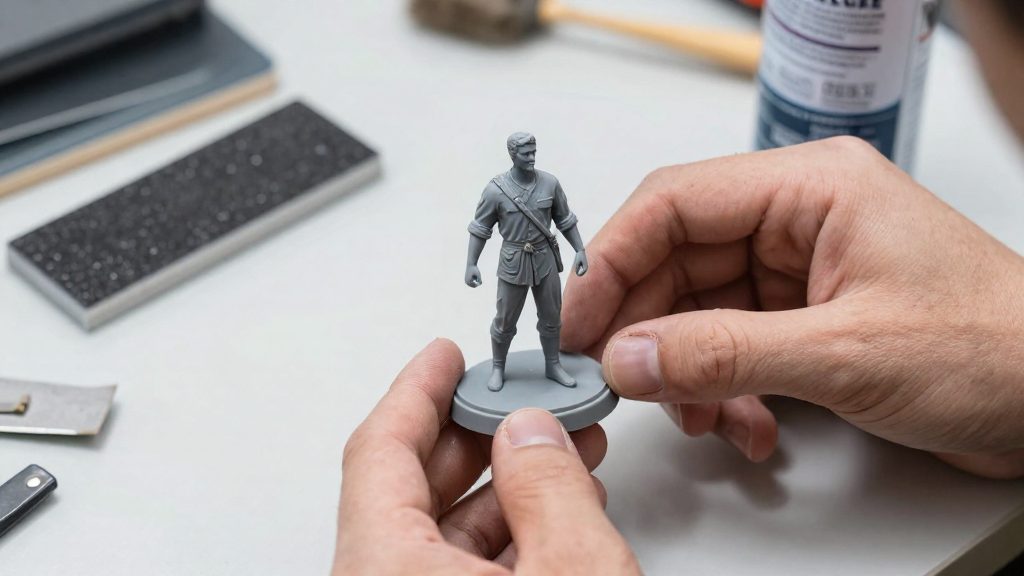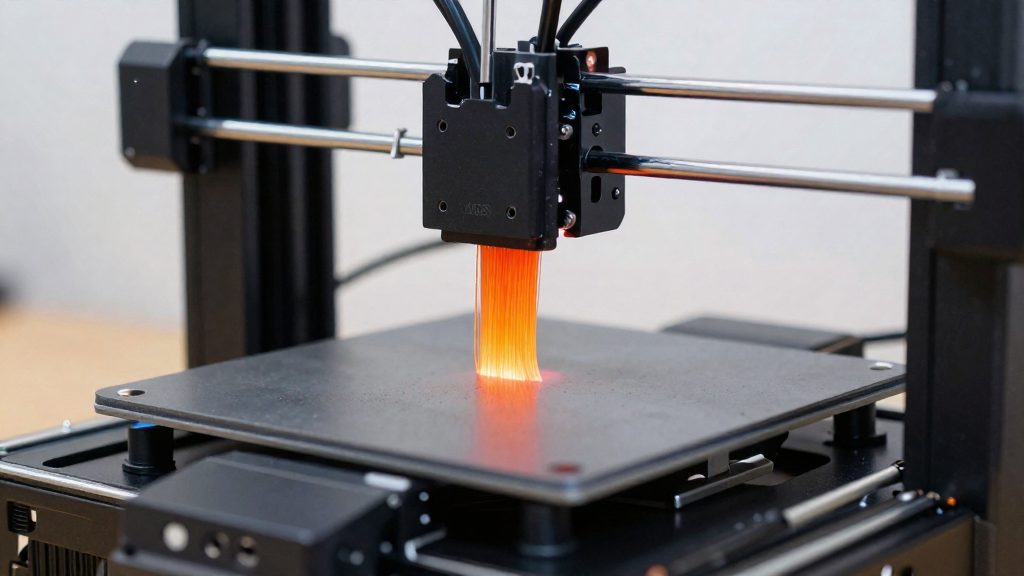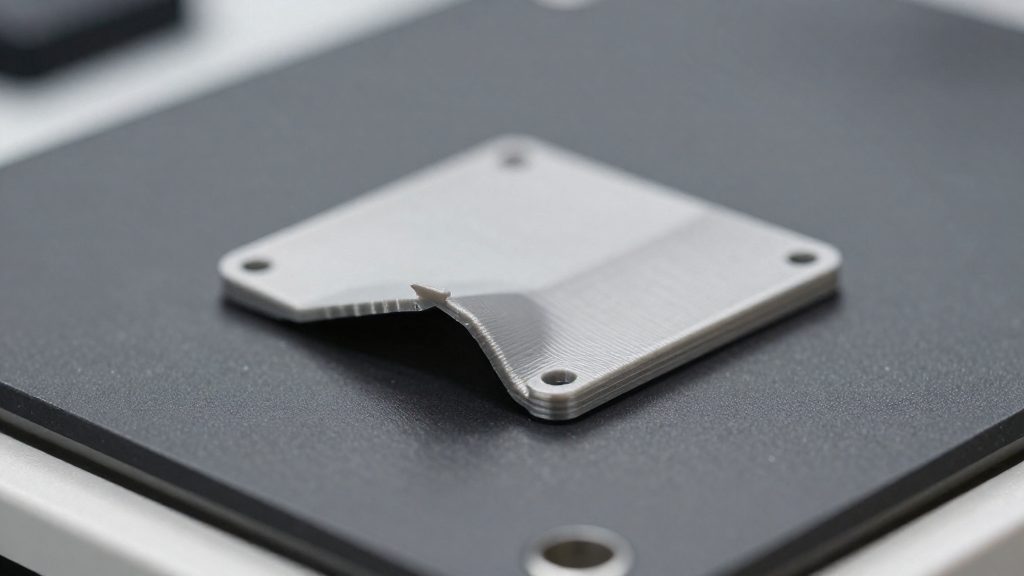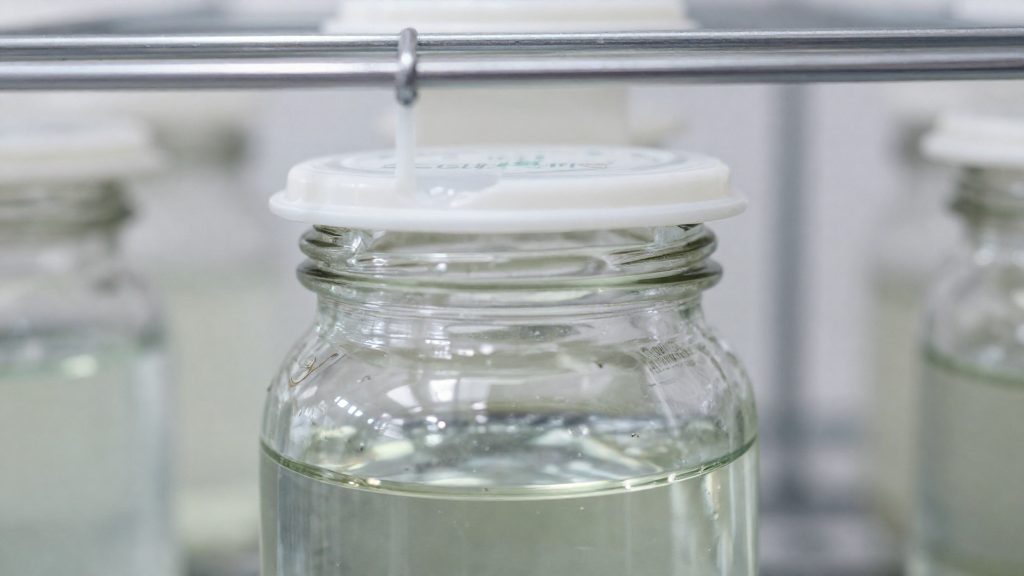
No. Acetone vapour does not produce a meaningful smoothing effect on PLA. In Prusa Research’s testing, PLA prints exposed to acetone vapour for hours only softened slightly, and acetone brushed onto the surface gave no noteworthy result. Vapour smoothing is therefore a poor finishing choice for PLA, even though it works on other plastics.
Does acetone vapour smooth PLA?
Extended vapour exposure did not change the outcome. The prints softened slightly, but the change was too small to count as smoothing. Adding more hours of exposure did not produce a visibly different surface, so time alone is not a workaround for PLA.
Brushing acetone onto PLA produced no noteworthy result either. Neither route tested, vapour or direct application, produced meaningful smoothing on PLA. Brushing should not be treated as a gentler or more controlled alternative to vapour for this material.
The contrast with other plastics matters: the same solvent that improves those materials has little effect on PLA. For PLA, acetone is not a route to a smoother surface, so plan the finish with other methods.
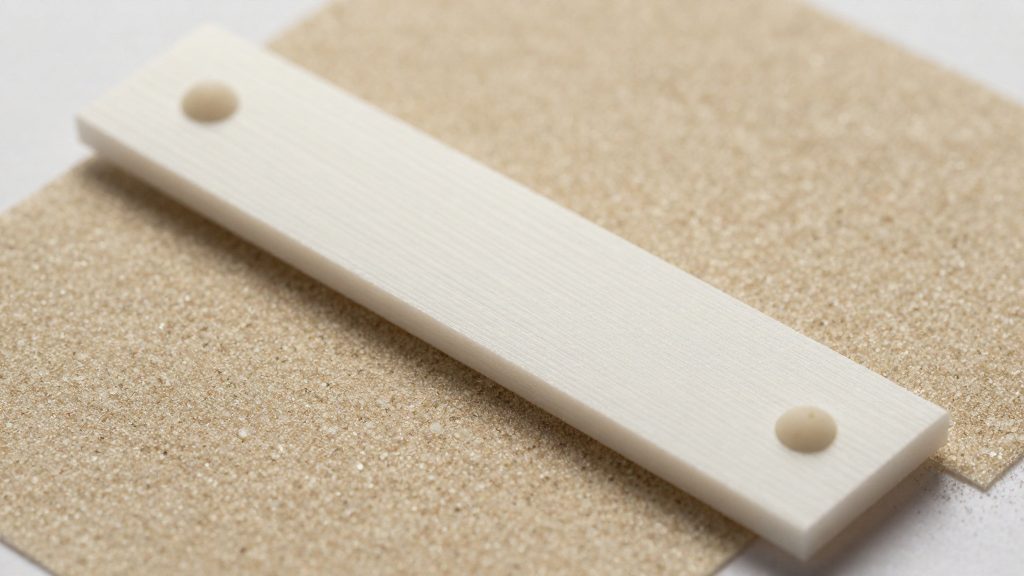
Why PLA reacts differently from ABS and ASA
Polymer choice decides whether acetone vapour smoothing works. According to the Prusa Research blog, acetone vapour smooths ABS and ASA prints well, but it does not smooth PLA. The same solvent therefore produces opposite results depending on the plastic it contacts.
For PLA, the same process does not produce a smooth surface. Acetone is not useless on PLA, though. The same source notes that acetone works well as a glue for joining PLA parts, even though it does not smooth them.
This gives two practical rules:
- For PLA, do not plan a smoothing step. Use the finishing methods that suit PLA instead.
- If you need to join two PLA parts, acetone can serve as an adhesive.
What happens when PLA meets acetone
Acetone is a common finishing solvent in the hobby, but it does not behave the same way on every filament. According to Prusa Research, acetone was not effective on PLA, and the test showed that the method that works well on ABS and ASA fails on PLA. The most extreme version of the approach, a full acetone immersion, damaged the prints outright.
Full immersion bleaches and destroys PLA
Submerging a PLA model completely in acetone produced the worst result in Prusa’s test. The models were bleached, meaning their colour faded, and they were destroyed. A print that goes into the bath does not come out smoother. It comes out as a damaged part.
Layer lines remain visible
Layer lines are the horizontal ridges left by each deposited layer. Smoothing methods are usually expected to reduce them. In the same test, the layer lines stayed visible after the full bath, so the immersion did not remove the surface defect it might have been expected to address.
Taken together, these results mean that a full acetone bath gives no finishing benefit on PLA. The print is lost to bleaching and destruction, and the layer lines that prompted the treatment remain.
Acetone as a glue for PLA parts
Acetone’s most practical use on PLA is joining parts, not finishing their surfaces. Prusa Research reports that acetone works well as a glue for PLA parts even though it does not smooth them. Brushing it onto a printed surface gave no noteworthy result in their tests, so the value lies in bonding two pieces at their contact faces.
Because the bond depends on contact, fit matters more than quantity. A joint works only where the faces actually touch, so check the fit before applying any liquid:
- Dry-fit the parts and confirm the mating faces sit flush, with no gap for the liquid to bridge.
- Apply acetone only at the joint faces and test the method on a scrap print first, since the source gives no detailed procedure.
- Hold the assembly clamped or supported until the joint sets.
Test a sample joint on a scrap print before relying on it for a functional part.
Acetone vapours can cause respiratory problems, so work in a ventilated area and wear gloves and face protection. Keep the parts on a stable surface during curing, and do not leave the setup unattended.
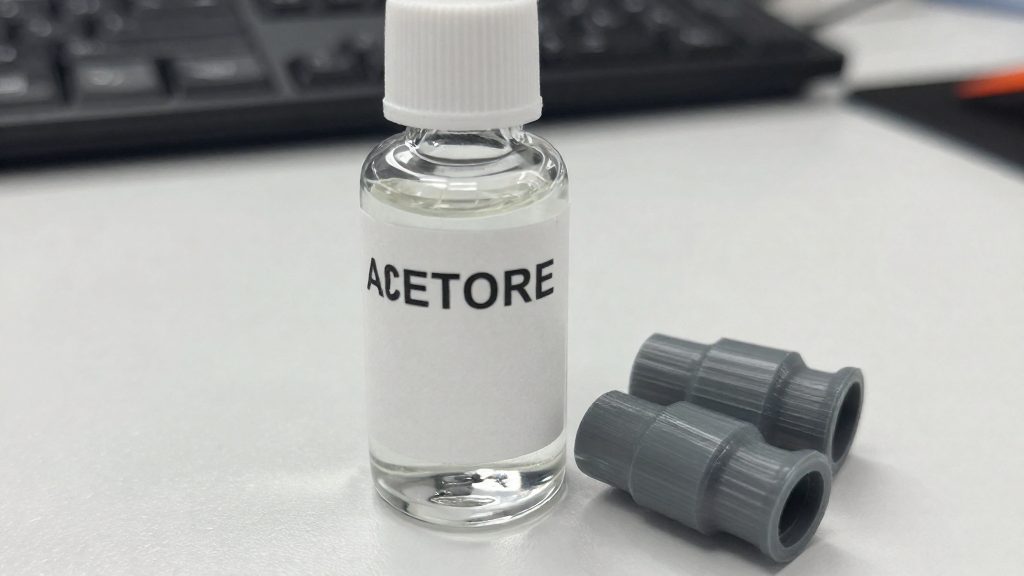
Is acetone vapour safe to use at home?
Acetone vapour is a real health hazard, so home use only makes sense with deliberate controls. According to Prusa Research blog, acetone vapours can cause respiratory problems. Work in a ventilated area, never in a closed room, and wear gloves and face protection whenever you handle the acetone or open the enclosure.
Enclosure design is where home setups most often fail. A sealed box can build pressure, so the enclosure needs small vent holes to let that pressure escape. Avoid boxes that close with locks or rubber seals, because those prevent venting.
Heat adds a second risk. Heat adds a second risk. According to Prusa Research, heating acetone is risky, and Prusa’s ASA setup uses a heatbed at about 80 °C. Never raise the temperature or extend the exposure to speed up the process. Any fan or heater near the setup must not be able to spark, and you should check the power and wiring of each device before you start.
Supervision completes the safety conditions. The setup must be watched at all times, so never leave it unattended, even when the process looks stable. Keep the workspace clear of anything you do not need, and stay near the setup until the enclosure is fully open and the part is removed.
When to choose ABS or ASA for smoothing
Acetone vapour smoothing works well on ABS and ASA, according to Prusa Research (blog). If your part is printed in one of these two filaments, it is a suitable candidate for the method. Check the filament type before you start, because the same vapour treatment does not carry over to every material.
Prusa’s ASA setup is detailed below:
| Parameter | Value in Prusa’s ASA setup |
|---|---|
| Heatbed temperature | About 80 °C |
| Acetone quantity | About 5 mm |
| Exposure time | About 20 minutes |
| Over-exposure | Can deform parts |
The figures above apply to ASA.
Because over-exposure can deform parts, the exposure time is the setting that needs the most attention. Plan the treatment for about 20 minutes and remove the part once that time is reached. Leaving it in the vapour for longer does not improve the surface in a way the source describes; it raises the risk of distortion.
Keep the heatbed near 80 °C throughout the treatment, as in Prusa’s setup, so that the acetone vapour stays at the same working conditions from start to finish.
Frequently asked questions
Can acetone still be useful on PLA parts?
Yes, for joining rather than finishing. Prusa Research reports that acetone works well as a glue for PLA parts, even though it does not smooth their surfaces. Test a sample joint on a scrap print before gluing functional parts.
What happens if I leave PLA in acetone for longer?
Extending the exposure does not produce a smooth surface. Hours of vapour only softened the prints slightly, and a full acetone bath bleached the models and destroyed them while the layer lines stayed visible.
What makes an acetone chamber for ABS or ASA hazardous?
The main risks come from the sealed container and from heating the solvent. A sealed box can build pressure, so it needs small vent holes and must not have locks or rubber seals. Never leave the setup unattended, and do not raise the temperature or extend the exposure to speed up the process.